
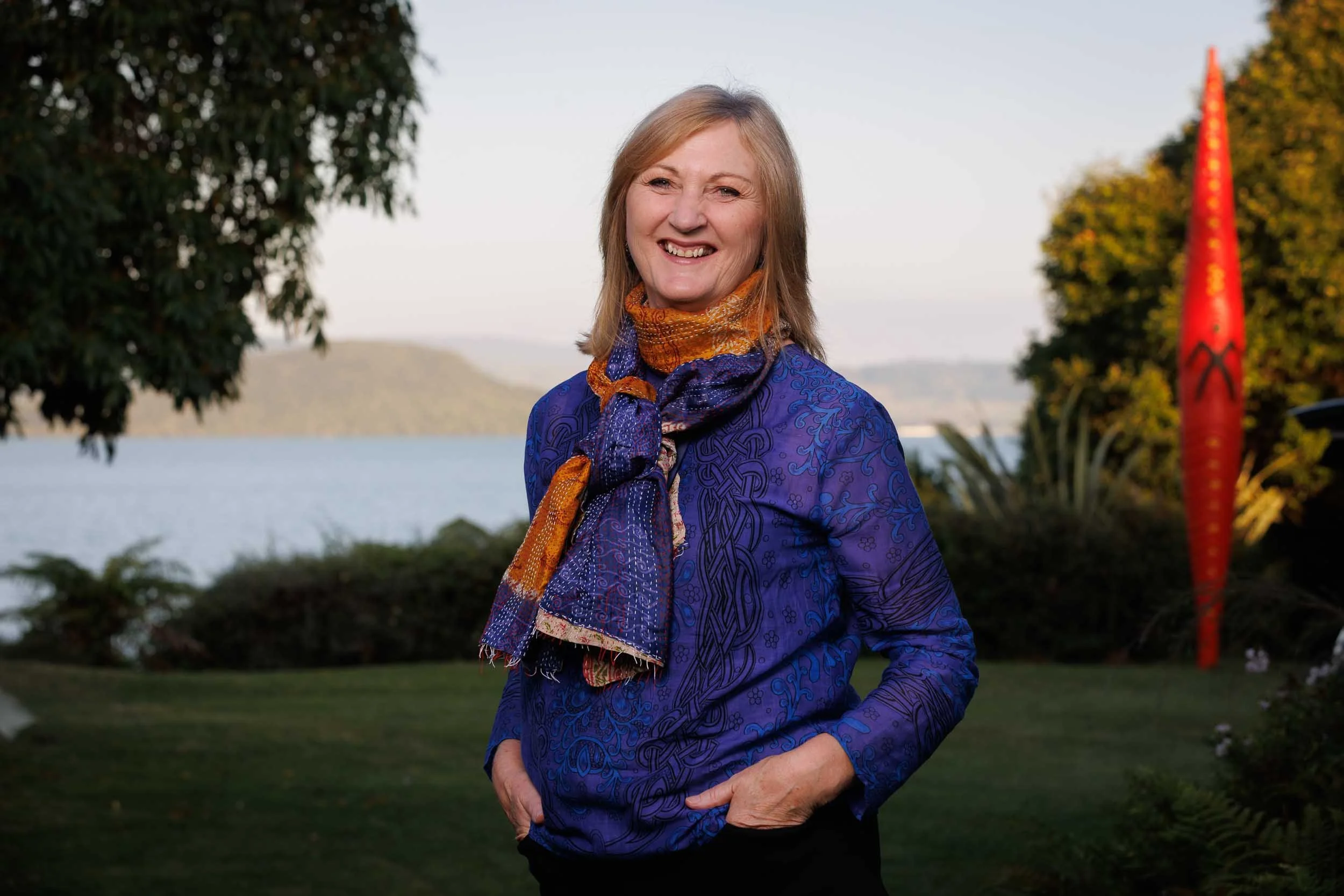
Shona Jennings
Former Mamaku farm girl’s career of contrasts
Words Jill Nicholas
Pictures, video Stephen Parker
If ever anyone's lived a life constructed around contrasts it's Shona Jennings.
It' content is as contradictory as it's possible to get, see-sawing from the extremes of luxury to the poverty of some of the world's poorest countries.
Take these examples:
Shona's lived it up on the French Riviera with Prince Albert of Monaco and fashion supremo Karl Lagerfeld. who was launching an exotic perfume to the world's fashion media.
She's scrubbed, and scrubbed some more, at what passed for toilets in the depths of South Africa's poorest and most neglected informal settlements.
She's worked for, and edited, two of this country's top fashion magazines and battled her way across a crocodile-infested river in Papua New Guinea (PNG) with her husband and their then toddler daughter.
Shona's husband, Stephen Knight-Lenihan, was on a World Wildlife Fund mission to the country's remote highlands.
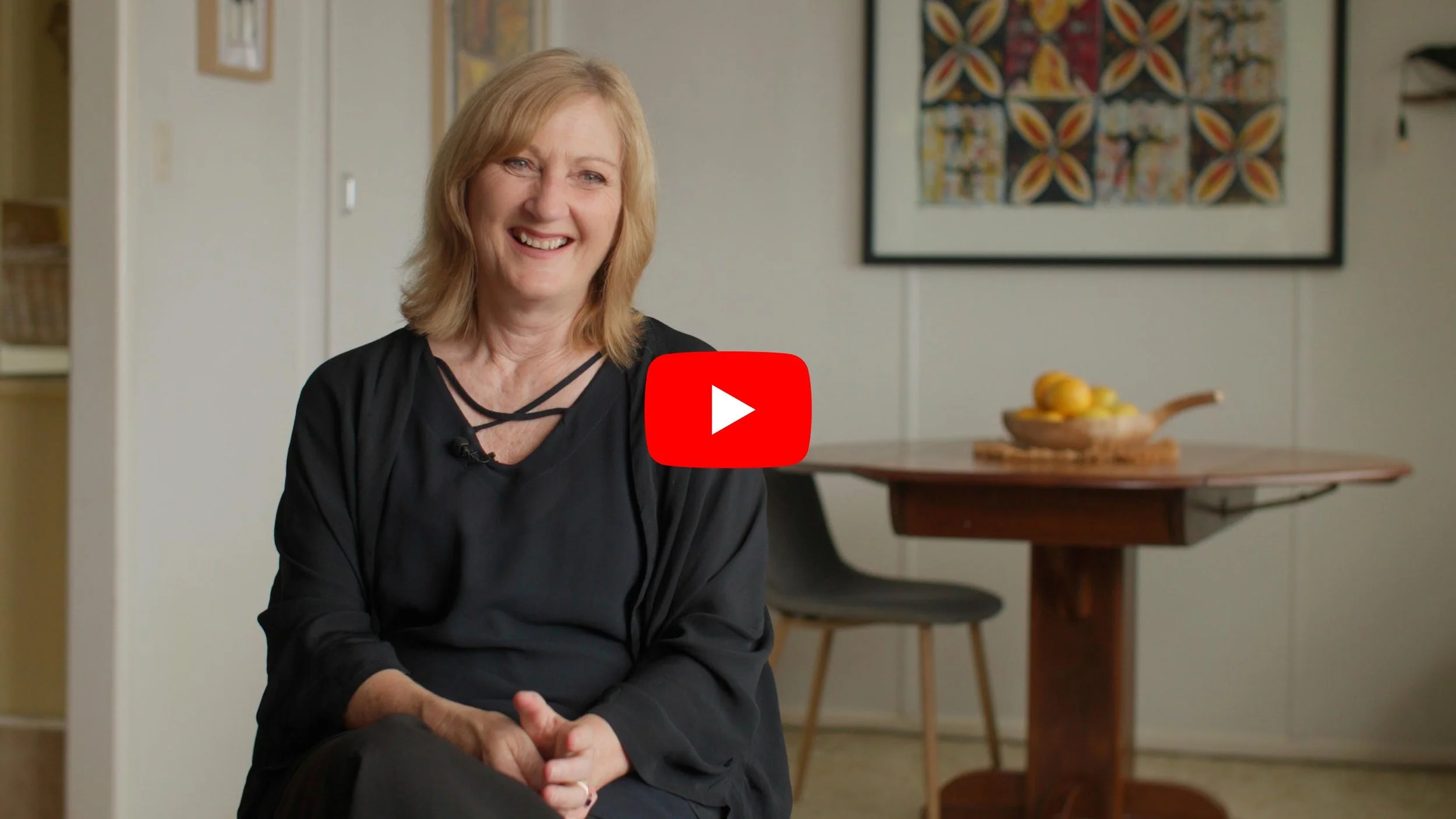
Intrepid travellers
As a couple they've been the ultimate intrepid travellers. They've conquered Borneo's jungles - and its leeches.
They've roughed it trekking through Nepal and Tibet, where Shona succumbed to altitude sickness.
She casually says they "wanted adventure".
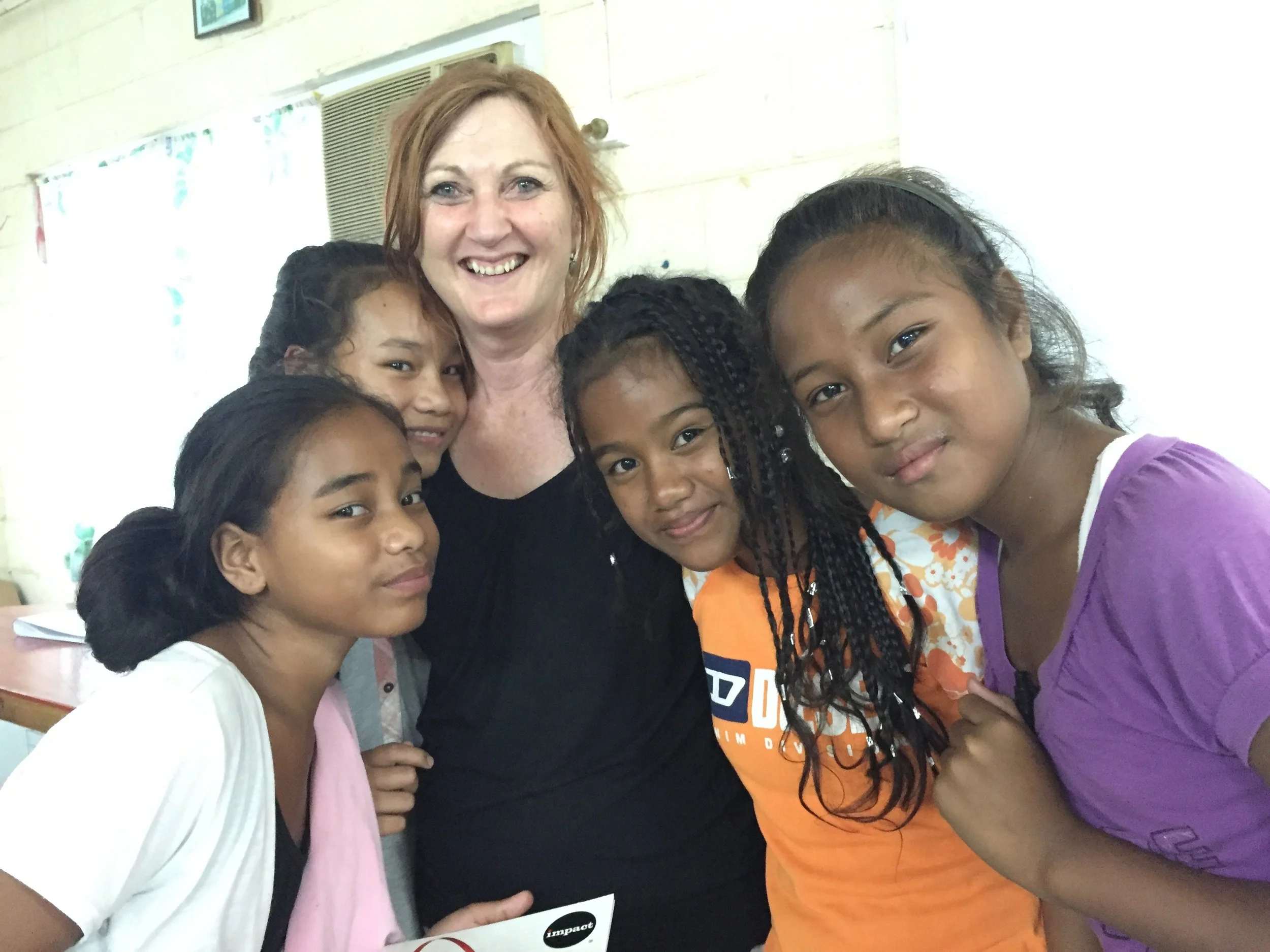
On the more grounded side of the ledger she's promoted travel, arts and culture throughout the Pacific, produced people-focused books and held senior positions with Volunteer Service Abroad (VSA) and ChildFund NZ.
She returned home last year after four years in Sweden, working with Barnfonden, that county's ChildFund NZ equivalent.
Her present job is senior programmes manager, overseeing project delivery with the Fred Hollows Foundation.
This is one heck of a resume for someone who grew up on a Mamaku farm and worked in the Koutu dairy as a school kid.
Daughter Arian (Ani) Lenihan has beaten her parents into In Profile's archives.
We featured her in 2022 when she was briefly home after graduating from London's Rose Burford College of Drama and Performing Arts.
She returned to the UK where she's immersed in theatre and film.
Sustainability commitment, farm life
That Ariane's an only child was a deliberate decision her sustanability-committed parents made.
Shona explains that Ariane was "in the making" when climate change began to be talked about.
"We decided one of the most important things we could do was to have only one child to limit our ecological footprint as a family,"
Climate change and its related issues have been major factors in the couple's work choices.
We'll come to that, but our first task is to give some semblance of order to the timeline framing Shona Jennings' multi-faceted back story.
She was the second of Neville and Joan Jennings' four daughters. Her brother Paul came later.
She desceibes their childhood as idyllic, growing up on the 240 hectare (600 acre) Mamaku sheep and cattle farm.
"It was surrounded by a scenic reserve, the bush was our playground.
"We loved it, made huts.
"We got out on the farm a lot, helped with docking.
"It was such a lovely, natural upbringing."
It was where Shona's love of people was nurtured.
"The Agricultural Department would bring visitors from countries like Japan, Iran and China to visit.
"I was really interested in meeting people from other cultures who had different lived to ours."
Shy head prefect
Moving from tiny Mamaku Primary to Western Heights High came with a sizeable serving of culture shock for the dedicated farm girl.
Regardless, she went on to be its 1978 head girl.
She started what was set to become a family tradition. Her two younger sisters Pamela and Angela, (now Peters and Wharekua respectively), held the same leadership role.
"It was a sporty, rugby-focused school. I wasn't into sport. I was an arty person focused on theatre. The school pantos were my big thing.
"In my time at Heights the arts didn't get a look in."
It was something she took the school to task over in her final address as its head prefect.
"In my end-of -year speech I remember saying 'This has got to stop'.
"That was probably the most outspoken I ever got. I was really very shy."
Outside school hours she "graduated" from the Koutu dairy to the souvenir shop at Rainbow and Fairy Springs where her older sister Joanne (now Bryant) also worked.
"I worked with a great team. They really helped me come out of myself."
Study, peeling tulip bulbs
With her Heights days behind her, she enrolled at AIT (now AUT) to study adverting and marketing.
She was 19 when she married her schooldays boyfriend, Andrew Molijn.
It was a marriage that wasn’t to last but they crammed a lot into their time together.
"The lure of travel was strong.
"Andrew’s family were from the north of Holland so we headed there.
"We took on seasonal jobs peeling tulip bulbs.
"We had a car and spent our time travelling around Europe."
Back home, they lived in a cottage on the Jennings' farm with Shona commuting to Radio Geyserland's advertising department.
Magazine work
When the couple parted she returned to Auckland, selling advertising and "dabbling" in copywriting at Radio ZB.
"I had a really strong desire to work in magazines.
"I had this vivid memory of Mum getting the English Women's Weekly and Family Circle and how important they were to women like her.
When there was an opening to join MORE magazine Shona grabbed it.
"I spent several years moving around the departments until I eventually became editor of MORE Fashion.
"That was fantastic. I could be really creative.
"I learnt how to write, to style, arrange glamorous photo shoots, connect with readers.
"I was lucky to have fabulous strong women who stood up for me, pushed me forward, taught me so much.
"When I became a boss I tried to use their philosophy to encourage other women to succeed."
When MORE Fashion merged with Fashion Quarterly Shona became assistant editor with style icon Paula Ryan.
Wasn't that a tad intimidating?
"Working with her was a really good experience, she gave me a lot of freedom to do what I was responsible for. It worked well."
There was a move back to MORE Magazine as its editor.
When further media mergers saw MORE vanish from the news stands Shona embraced redundancy.
Arts, crafts, intrepid travel
"I took up arts and crafts work for TV programmes like Town and Country and Changing Rooms."
Moving in Auckland's media circle she reconnected with journalist Stephen Knight-Leinhan. They’d been colleagues at Radio Geyserland.
Kindred spirits, they shared a passion for the environment and ecology.
"Stephen was working for the Herald and went to Antarctica on the Greenpeace boat.
"He wrote a book about that trip titled Icebound.
"We decided to go overland and meet the Greenpeace photographers in London."
That's how Tibet and Nepal came onto the intrepid travellers' itinerary.
"In Nepal there were a lot of landslides. You had to portage your gear over them."
In a doozy of an understatement Shona says "It was a bit dangerous, really.
"When I got altitude sickness we were on a bus stuck in a river bed in Tibet.
"We hadn't taken enough water with us.
"You can't be an independent traveller there now.
"They’ve closed the borders to independent travellers. You have to go on proper tours."
Trans Siberian Railway, Thai prostitutes
They boarded the Trans Siberian Railway in China, disembarking in Berlin.
In London they bought a mini, touring Scotland with Shona’s sister Angela.
Shona and Stephen married in Auckland's Cornwall Park in 1987.
"Our wedding was just a simple picnic in the park."
Following the demise of MORE Shona began editing Polynesian Airlines in-flight magazine.
"That got me to a lot of the Pacific Islands."
There was also a trip to Thailand, not to lie on an exotic beach but to work with prostitutes
"At MORE I'd interviewed this amazing lady who worked with Thai girls sold into prostitution.
"I joined her for a few weeks up near the Burmese border supporting them in their work to convince parents from the hill tribe areas to get their daughters an education instead of seeing them head off into an unknown future.
"I interviewed a lot of the girls to help them communicate their stories."
Books, epiphany
Everyday people are the cornerstone on which her writing's built.
"I like to collect people's stories and shuffle them in a way that makes it entraining for the reader."
It was Shona Jennings who complied the book Mamaku -100 Years when the area celebrated its centenary in 1994.
"I loved doing the Mamaku book because there were so many great characters there like the old-time bushmen."
Thailand inspired a direction change.
"I had this epiphany of finding something more meaningful to do with the skills I had."
She was accepted into Massey University's postgraduate diploma course in international development.
Her Masters followed. Both were completed via distance learning.
While studying, she continued to produce the Polynesian Airlines in-flight magazine and travel around the Pacific.
"That was awesome, it got me engaged in Pacific culture.
"I was back being a nosey journalist, asking questions.
"How privileged is that?
"It was very helpful when I was going through the diploma's social development courses.
"I got to understand more about colonisation, gender issues, power issues.
"I grew a lot as a person during that time."
Pacific arts trustee, PNG wilderness
She was still studying when she was approached by internationally acclaimed Samoan-New Zealand artist Fatu Feu'u.
"He called me up and said he really wanted to help young Pacific artists in New Zealand.
"That's how I became a founding member of the Tautai Pacific Arts Trust. It's still going almost 30 years later with funding from Creative NZ.
"I've written a book about Fatu, too".
Her Tautai work began around the time daughter Ariane was born.
She was two when her parents took her with them to PNG for that World Wildlife Fund wilderness adventuring.
"We were two days into the trek involving that croc-infested river crossing when I thought 'What the hell are we doing here'?
"There was no help nearby, no communications. Thankfully nothing happened."
Home base was in Wewak on the northern coast.
"People there befriended us. Having a white-haired toddler was the ultimate ice breaker."
Shona embraced tourism consultancy, working with carvers.
"I set up a group to help them promote themselves and expand their markets. That was really cool."
Conservation, thesis, VSA
One PNG project focused on alternative ways for locals to make a living without selling their forests.
"The Hunstein Forest area is one of the richest bio-diverse places in the world.
Shona wove her Masters thesis around the desperate need in such genuinely remote communities for development aid.
"You have no idea what a struggle it is for communities like that. Life's so hard."
Shona began writing her PNG-inspired thesis in Rotorua.
"Stephen was lecturing and working towards his PhD in Auckland.
"I came home to Dad's for a bit so Ariane could reunite with her cousins. They were living there too."
Ariane was four when the family moved to Wellington.
Her mum had been appointed VSA's external relations manager.
Mandela’s stamping ground
"I 'd been there five years when a VSA job in South Africa was advertised.
"It was for an advocacy advisor for the Eastern Cape NGO Coalition.
"I was asked to be on the interview panel.
"I said 'I can't, I want that job'.
"I applied and got it."
The Jennings-Knight-Lenihan 'coalition' moved to East London.
"Stephen got a fabulous job with the Wildlife and Environmental Society of South Africa.
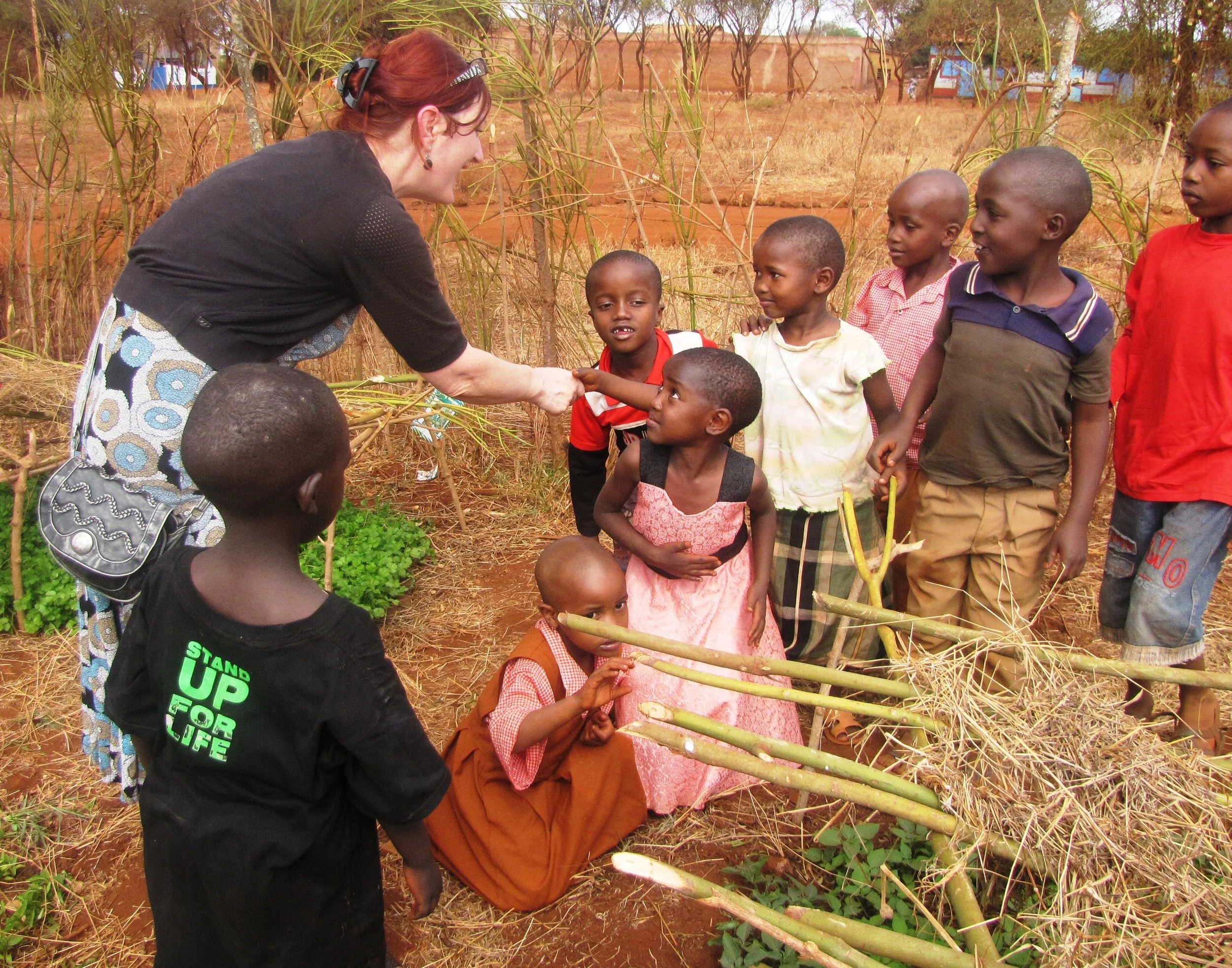
"I was doing a lot of travelling to remote parts of the Eastern Cape, working with impoverished communities.
"It was home to the Xhosa tribal group where Mandela came from.
"During apartheid it had been very neglected and under-developed
It's here she scrubbed multiple toilets.
Another profile-type book was written there.
"We had a lovely friends group who introduced us to Africa culture.
"We did a lot of adventure stuff, seeing heaps of elephant parks, lots of wildlife."
They were away two years.
Childfund NZ, Sweden
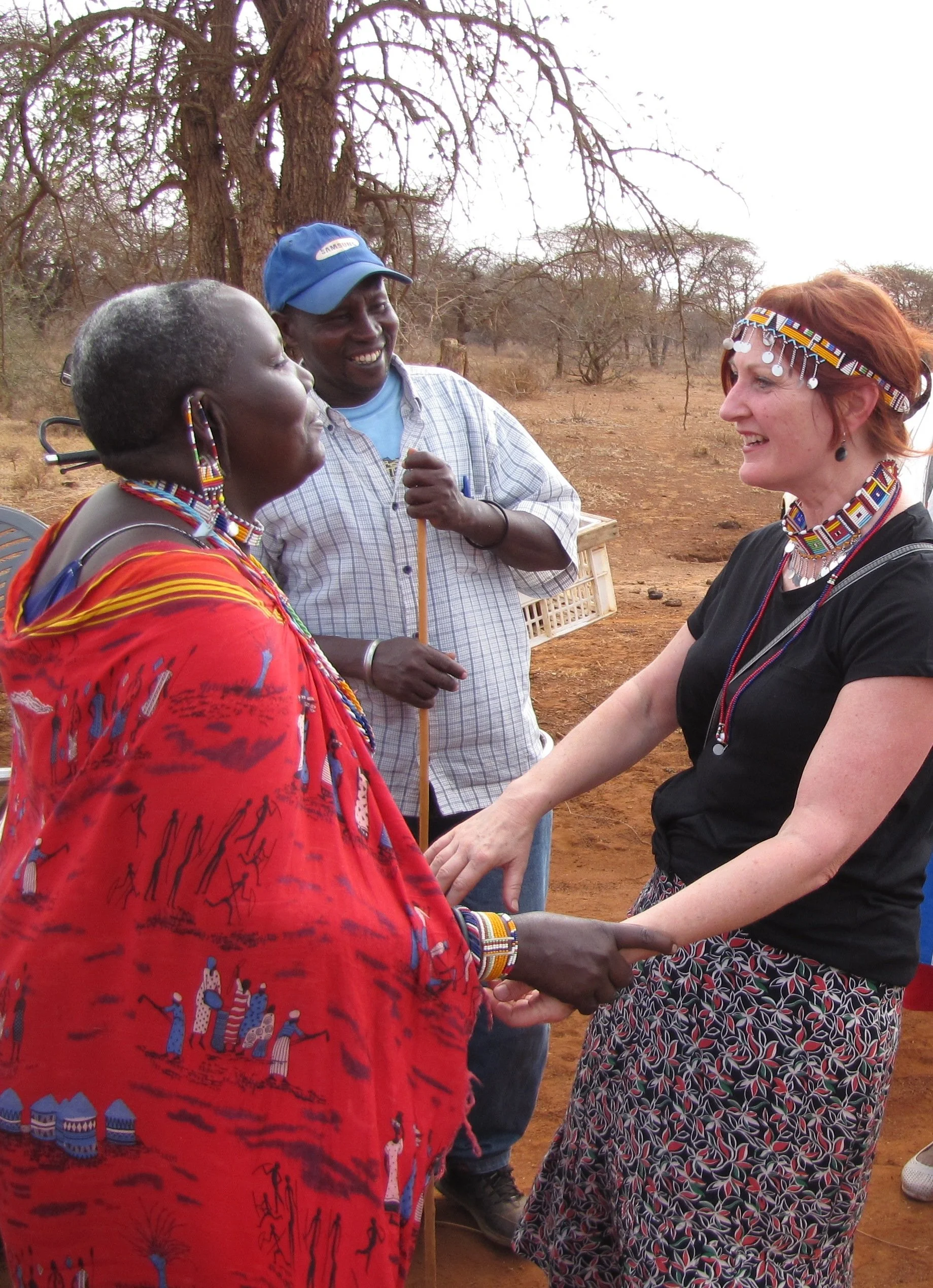
Next to appear on Shona's work history record was programme director of ChildFund NZ, working on projects in Sri Lanka, Kenya, Zambia, Vietnam and Timor Leste.
She developed the organisation's Pacific programme while there, commencing work in the Solomon Island and establishing a ChildFund branch in Kiribati,
"Again, we were working with very disadvantaged communities, helping them to find solutions, learn how governments work and how to get governments to addresses their most pressing needs -
basic things like providing clean drinking water and improving children's lives."
Shona's 2020 move to ChildFund's Swedish counterpart was motivated by its commitment to climate change and children.
"The big focus was on how climate change is affecting the lives of children.
"We were getting children involved in finding solutions."
Greta Thunberg, climate change
Naturally young activist Greta Thunberg springs to mind.
Shona sees her as a great international role model.
"I think she's advanced things considerably for young people to have a voice and look forward to a future that’s not stuffed up by decisions made now that aren’t going to work against them."
Like ChildFund NZ, Barnfonden's programmes and projects were far-reaching.
On the climate change front countries Shona connected with included India, Bangladesh, Bolivia, Ethiopia and Uganda.
Her husband worked with her on what can best be described as their passion projects - sustainability and all things climate related.
"We were working with communities in places like north Kenya where they haven't had rain for three years.
Retuning to New Zealand in the middle of last year Shona continued to work remotely with Barnfonden in an advisory role.
Fred Hollows Foundation, homecoming
In March last year she switched to The Fred Hollows Foundation NZ and, yes, climate change features.
"Fred Hollow's facilities have to cope with cyclones and similar events."
Shona points out most are on the coast or near rivers.
"The need to be climate resilient is urgent."
This year she's also doing consultancy work for Habitat for Humanity in the Pacific.
With so much of the world visited or worked in, Rotorua and its environs is where her heart is.
She and Stephen (he lectures in environmental planning at Auckland University) are about to turn the Ngongotaha lakefront bach they bought in 2017 into their permanent home.
"It's that time of life when I want to be here with my family.
"It's always been home. It's time I came back home.
"I'm so lucky to have such an amazing family and friends to come back to.
"When you're exposed to a very different world you are humbled by how resilient others are and their daily efforts to put food on the table for their children.
"It makes you realise how privileged you are.
"Above all it teaches you we are all human beings."
SHONA JENNINGS - THE FACTS OF HER LIFE
-
Born
Rotorua, 1960
-
Education
Mamaku Primary, Western Height High (head prefect), AIT (Diploma in adverting and marketing), Massey University Palmerston North (post grad diploma in development studies and Masters - both distance learning).
-
Immediate family
Husband Stephen Knight-Lenihan, Daughter Ariane Lenihan (London), Three sisters, one brother.
-
Interests
Family, arts and crafts, sewing. "My sewing machine has been my travelling companion whenever I go overseas." Reading "Crime for escapism." Travel.
-
On Rotorua
"I'm so proud of this city and its fabulous environment."
-
On herself
"I am practical. Growing up on a farm means you become a bit of a 'can do' person."
-
Personal philosophy
"Kindness and wisdom."
*This is the final In Profile in the series.